
Ask what the standing water means
A camera may show submerged sections, but footage alone can be difficult to interpret when flow or a downstream obstruction is present. Ask how the provider distinguished a true low section from temporary backed-up water and whether the location was checked after cleaning.
Require a grade-correction explanation
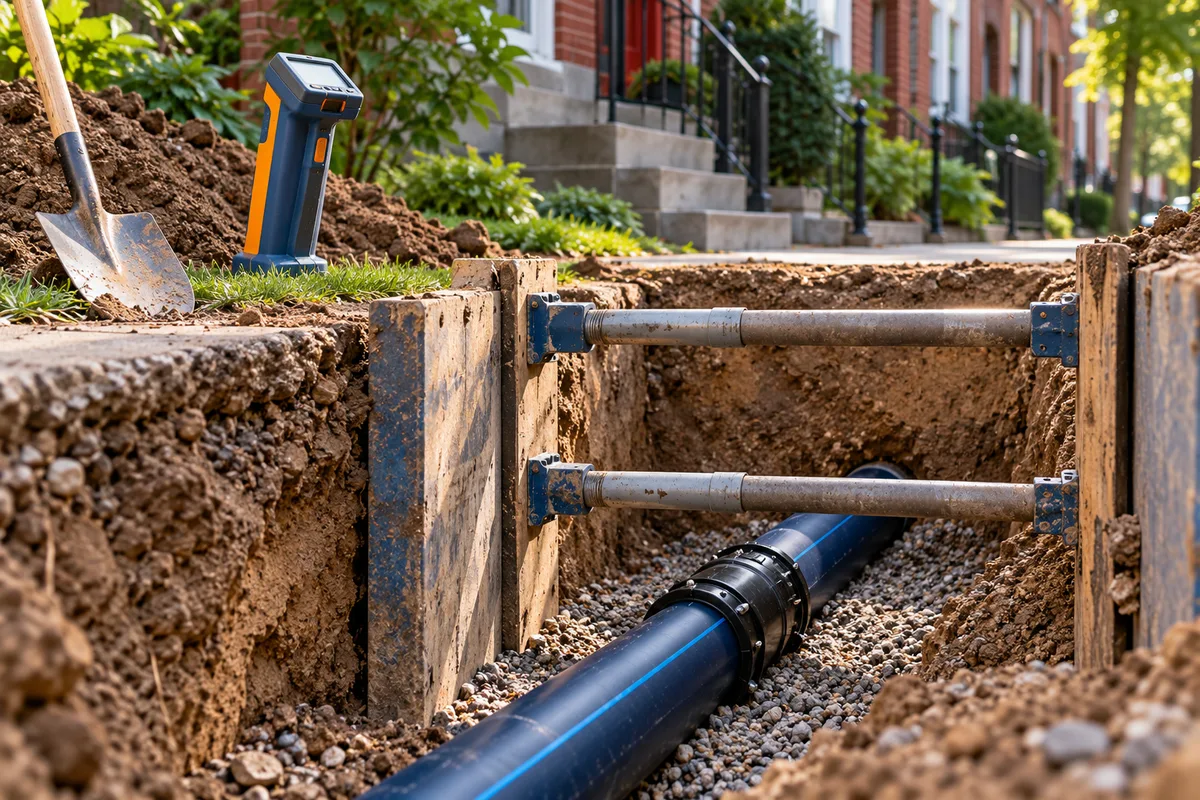
If a repair is advertised as trenchless, ask exactly how it changes the elevation of the low section. A proposal that merely lines the existing shape does not answer that question. Some situations require localized or longer excavation to establish a workable fall.
Decide based on function and evidence
The length, depth, severity, deposits, and history of backups matter. Ask whether monitoring, cleaning, localized correction, or replacement is appropriate and why. Keep the recommendation tied to the measured defect rather than assuming every stretch of standing water needs a whole lateral replaced.
Your next-step checklist
- Ask how a true belly was confirmed
- Request the proposed grade correction
- Compare a localized repair with full replacement
Discuss the next step for your property
For a Philadelphia service enquiry, call (267) 740-0245. Describe the symptoms, the address, and any inspection findings. Ask about Sewer excavation & spot repair and confirm provider availability before arranging work.
This guide describes a problem scenario, not a completed customer job. It is general information, not a diagnosis, engineering design, coverage decision, or legal advice.
Confirm current requirements with the responsible department and the provider assessing your property.