Trenchless Sewer Repair in Manayunk
Manayunk is Philadelphia's hill town, and hills are a sewer problem. Mill-era housing stacked on steep grades, stone foundations, and laterals that run downhill at angles the original installers eyeballed a century ago. Here, the camera doesn't just find breaks — it reads grade. And grade is the one thing trenchless methods can't fix.
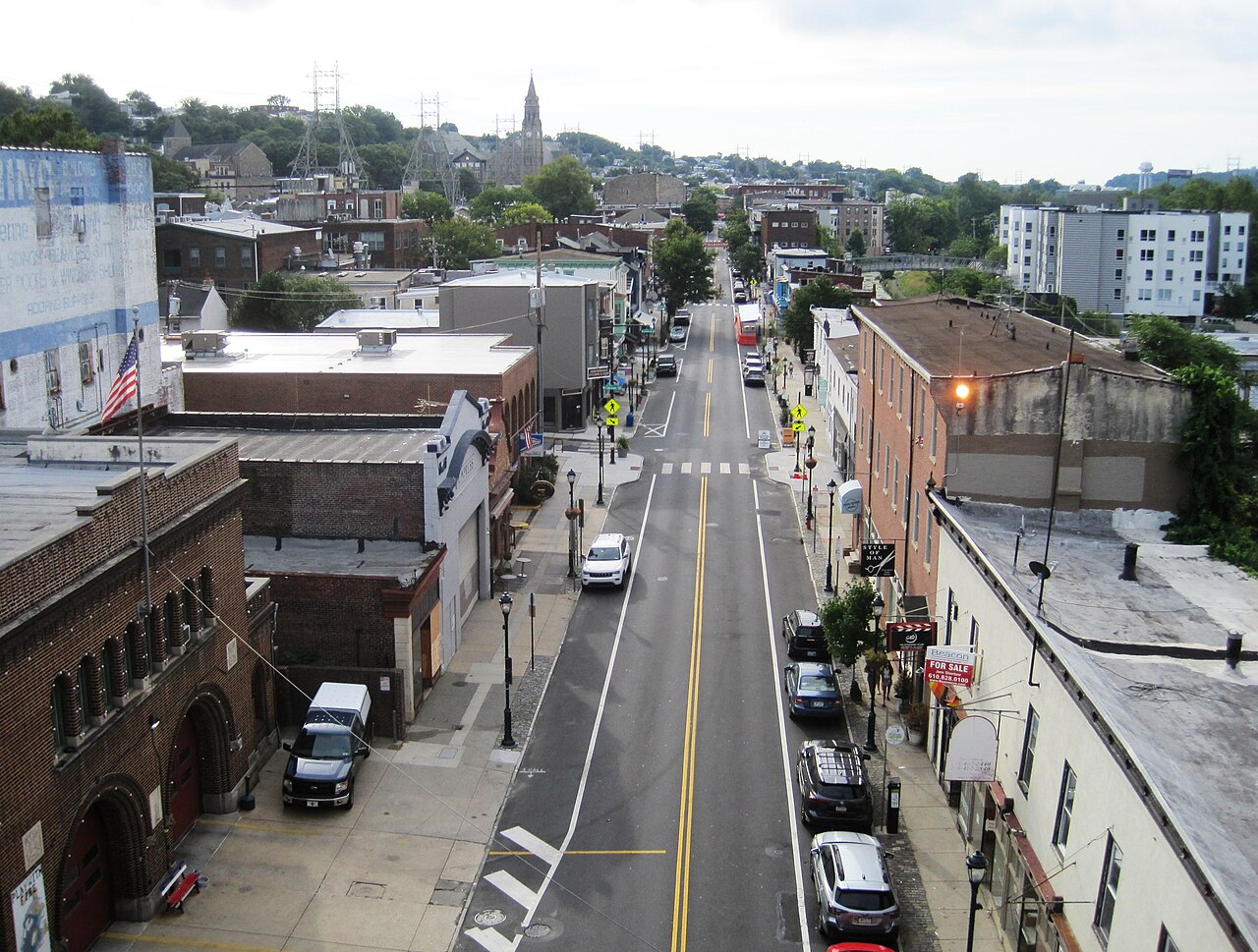
Manayunk laterals: where grade is the whole story
In most Philadelphia neighborhoods, the trenchless question is about the pipe's condition: cracked, broken, or collapsed? In Manayunk, there's a second question that comes first: does the line actually drain? A lateral laid on a steep hillside a century ago — by installers working with string lines and judgment — can develop bellies where the grade reverses, sections that hold water instead of shedding it. And a belly is the one defect that trenchless methods follow rather than fix: a liner cures to the existing grade, and a bursting head pulls the new pipe along the old path.
This is why the camera visit in Manayunk includes grade reading, not just defect spotting. If the footage shows standing water in a dip, that's a grade problem — and the honest answer may be targeted excavation to rebuild that section at the right slope, even when the rest of the line qualifies for trenchless. We'd rather tell you that before you spend a dollar than discover it mid-liner.
Where the grade is sound, Manayunk's laterals respond to trenchless like anywhere else: root-bitten clay joints get CIPP lining, broken or collapsed runs get pipe bursting with jointless HDPE. The stone foundations common here actually pair well with bursting — the pits stay small and tidy, which matters when the lot is a hillside and the retaining wall is older than the house.
The curb trap deserves a mention too: on hillside runs, the fitting at the curb takes more stress than on flat blocks — settlement pulls at it from above. Original traps here fail at a good clip, and they're homeowner-owned per PWD, including the part under the street. The camera assesses the trap as part of every lateral inspection.
Stone, slopes, and staging
Manayunk's terrain constrains everything. Steep streets complicate equipment staging; stone retaining walls and tight hillside lots leave little room for spoils; and the Main Street corridor's commercial activity means any surface disruption has an audience. Trenchless methods earn their keep here twice: less surface disturbed on a hillside is less risk of disturbing something structural, and a one-to-two-day trenchless job beats a week of excavation on a slope.
When excavation is the honest answer — severe bellies, collapsed sections — we plan it like the hillside project it is: tight dig footprint from the camera's surface marks, proper bedding and grade on the new pipe, compacted backfill, and restoration. Philadelphia street-opening permits are handled on our side and itemized in the written quote.
Fall on the hill: roots, rain, and runoff
Manayunk's mature trees and steep grades make fall the high season for sewer trouble: a full growing season of root pressure on clay joints, autumn rain running downhill and loading every lateral, and hillside runoff finding any weak joint. A fall camera-and-jetting visit clears the year's root growth and — critically here — shows how the line handles water: does it shed, or does it pond?
If PWD has issued a Notice of Defect, the order is: read the notice, get your own camera inspection, get written quotes based on the footage. Public help with the bill exists — PWD's Homeowner's Emergency Loan Program (0% interest, 5-year repayment, (215) 685-4901) and the PHDC Basic Systems Repair Program ((215) 448-2160). For official guidance, contact PWD directly.
Your lateral, in cross-section
House → lateral → curb trap → city main. In Philadelphia you own all of it except the main — and the camera is how we map yours before quoting anything.
Manayunk — straight answers
No — and this matters more in Manayunk than anywhere in the city. A belly is a grade problem: the line dips and holds water. Lining cures to the existing grade and bursting follows the old path, so a bad grade stays a bad grade. Severe bellies need excavation to rebuild the slope. The camera reads grade before we recommend anything.
Hillside runoff loads the lateral on top of household flow, and any belly or partial blockage that was coping in dry weather gets overwhelmed. The camera shows whether it's a blockage, a grade issue, or both — the fix is different for each.
Usually yes — bursting's small pits are actually well suited to tight hillside lots with stone foundations. The camera visit confirms pulling room and pit placement on your specific property before anything is quoted.
Per-foot pricing by method — see our 2026 cost guide. Manayunk's variables are grade assessment, hillside access and staging, and whether a belly forces a targeted dig. Written quote after the camera, never over the phone.
Yes — per PWD policy the homeowner owns the lateral including the curb trap, even under the street. Hillside settlement stresses these fittings more than flat-block ones; our curb trap guide covers assessment and repair options.
What we do here
Pipe BurstingPipe Lining (CIPP)Sewer Camera InspectionSewer Lateral ReplacementHydro JettingTree Root RemovalCleanout InstallationTraditional Excavation
Other neighborhoodsOn a hill, grade is everything. Read it first.
Manayunk camera visits include grade reading — because the right method depends on how the line drains, not just what it's made of.
[[ADDRESS]] · Philadelphia, PA · Open 24 hours · PA HIC #[[HIC_NUMBER]]