Trenchless Sewer Repair in Northeast Philadelphia
Northeast Philadelphia is the city's biggest rowhome belt — Mayfair, Tacony, Holmesburg, Bustleton, Fox Chase — and its sewer story is a generational handoff. The brick rows run the classic clay laterals; the post-war twins and singles moved to cast iron; and both generations are now hitting the age where joints fail, roots enter, and scale chokes flow. Different pipe, same camera-first answer.
Northeast laterals: clay rows and cast-iron twins
The Northeast's housing came in two great waves, and the sewers came with them. The brick rows of Mayfair, Tacony, and Holmesburg — early-to-mid-1900s — run the classic clay tile laterals: segmented pipe, joints every few feet, and a century of root pressure working those joints open. The post-war twins and singles of Bustleton, Fox Chase, and Rhawnhurst moved to cast iron — stronger against roots, but with its own failure modes: internal scale and tuberculation that choke the diameter, and corrosion that thins the wall from the inside.
That split changes the diagnostic picture. On a clay lateral, the camera looks for root entries, offsets, and breaks — the familiar Philly story. On a cast-iron lateral, it also reads scale: the rough internal buildup that catches everything and shrinks capacity year by year. Heavy scale is where hydro jetting earns its keep as more than prep — descaling a cast-iron line can restore flow dramatically — and it's also what the camera assesses before any lining, since the liner needs a clean wall to bond to.
For failed clay, the methods are the standard trenchless pair: CIPP lining for pipe that still holds its shape, pipe bursting for pipe that's broken, collapsed, or undersized. For failed cast iron, bursting is often the cleaner answer — it replaces the scaled, corroded line with new HDPE in one pull. The camera footage decides; the symptoms just get you to call.
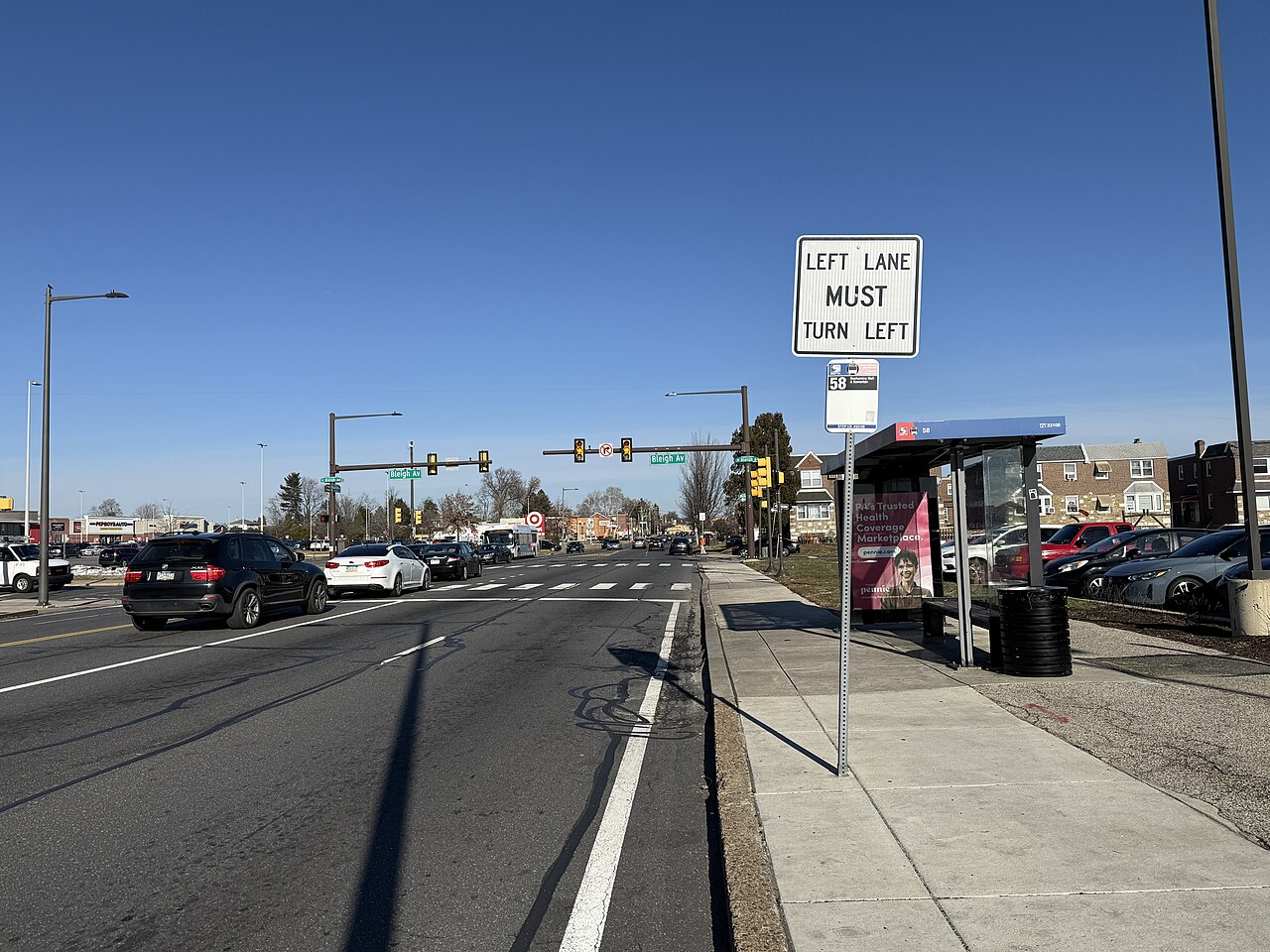
The Northeast's practical advantage is space. Wider streets, driveways, and deeper front yards than the city's core make this the easiest staging in Philadelphia — pits go where they need to go, equipment parks without a negotiation, and the logistics that complicate South Philly jobs barely register here. The work is the same; the setup is simpler.
The cast-iron decade
The post-war cast-iron laterals are hitting their failure window now — 60 to 80 years in the ground, which is exactly when scale becomes structural and corrosion becomes leaks. If your Northeast twin was built in the 1950s and the drains have been getting progressively slower for years, that's not a clog — that's the pipe's interior closing in. Snaking punches through it temporarily; jetting scours it properly; and when the wall itself is going, lining or bursting is the lasting fix.
This is also the generation where cleanouts start appearing — some post-war houses have them, many don't. If yours doesn't, every camera and jetting starts with an access workaround. Installing a cleanout is a small job that pays for itself across every sewer service the house will ever need.
What the camera finds in the Northeast
Northeast camera visits have their own greatest-hits list: root masses at clay joints under the neighborhood's mature street trees; scale-choked cast iron in the post-war blocks; separated joints where soil has settled; and curb traps — original across both generations — clogged with grease or failing at the curb. The trap is homeowner-owned per PWD, including the part under the street, and it's the fitting defect notices name most.
If you're holding a PWD Notice of Defect, the order never changes: read the notice, get your own camera inspection, get written quotes based on the footage. Public help with the bill: PWD's Homeowner's Emergency Loan Program (0% interest, 5-year repayment, (215) 685-4901) and the PHDC Basic Systems Repair Program ((215) 448-2160). For official guidance, contact PWD directly. And remember the deposit rule: Pennsylvania caps deposits at one-third on home-improvement contracts over $5,000.
Your lateral, in cross-section
House → lateral → curb trap → city main. In Philadelphia you own all of it except the main — and the camera is how we map yours before quoting anything.
Northeast Philadelphia — straight answers
It's common, not normal — progressive slowing in a cast-iron lateral usually means internal scale closing the diameter. It's fixable, but snaking won't fix it; the camera and a proper jetting will show what's actually happening in there.
Per-foot pricing by method — see our 2026 cost guide. The Northeast's variables are pipe material (clay vs. cast iron), scale severity, and curb-trap condition. Staging is the easiest in the city here, which helps. Written quote after the camera, never over the phone.
Yes — across both housing generations, and they're homeowner-owned per PWD, including the part under the street. Our curb trap guide covers assessment and repair, trenchless or with a permitted street opening.
It makes every sewer visit harder and more expensive — cameras and jetters need access. Installing a cleanout is a small, one-time job that simplifies every sewer service the house will ever need.
What we do here
Pipe BurstingPipe Lining (CIPP)Sewer Camera InspectionSewer Lateral ReplacementHydro JettingTree Root RemovalCleanout InstallationTraditional Excavation
Other neighborhoodsClay or cast iron — the camera knows.
Northeast laterals come in two generations. One visit shows which one is under your house and what it needs.
[[ADDRESS]] · Philadelphia, PA · Open 24 hours · PA HIC #[[HIC_NUMBER]]