
Ask for the proposed finished dimensions
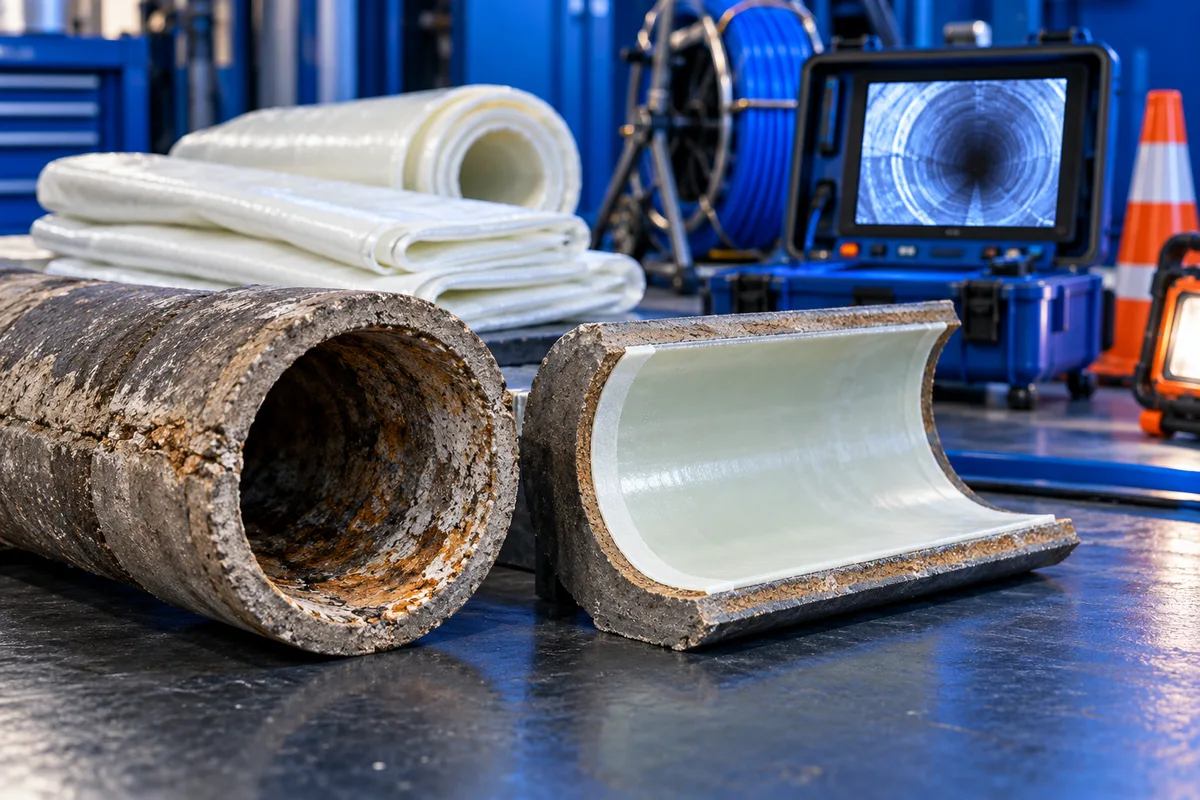
Request the host diameter, proposed liner thickness or design, and finished internal diameter. Avoid choosing a thinner liner purely to preserve space: structural design and product requirements also matter. The responsible provider should be able to explain the specification in ordinary terms.
Consider the whole drainage layout
The number and type of connections, existing bottlenecks, offsets, and poor grade influence function. A liner cannot be evaluated solely by comparing a before-and-after pipe sample. Ask whether the existing system is adequately sized and whether the proposed rehabilitation is appropriate for that application.
Document acceptance before installation
Get the specified system, repair length, and relevant approvals into the contract. Ask how the final condition will be inspected and recorded. If capacity is the main problem, discuss replacement or another design solution instead of assuming rehabilitation can solve an undersized line.
Your next-step checklist
- Request the finished internal diameter
- Ask about system capacity and grade
- Record the lining system in the contract
Discuss the next step for your property
For a Philadelphia service enquiry, call (267) 740-0245. Describe the symptoms, the address, and any inspection findings. Ask about CIPP pipe lining and confirm provider availability before arranging work.
This guide describes a problem scenario, not a completed customer job. It is general information, not a diagnosis, engineering design, coverage decision, or legal advice.
- Perma-Liner: lateral lining specifications ↗
- City of Philadelphia L&I: current applicable plumbing codes ↗
Confirm current requirements with the responsible department and the provider assessing your property.