
Use component names carefully
Philadelphia Water’s responsibility information distinguishes the house drain, curb trap, lateral, and connection. Ask the provider to mark the actual component on a sketch rather than calling every outside pipe “the sewer.” Confirm what was seen on camera and what was inferred.
Check the adjoining sections
Replacing a trap may leave other defects in place if the rest of the route is not evaluated. Conversely, an isolated trap defect does not automatically justify replacing every sound section. Ask what inspection was possible upstream and downstream and whether any further survey is needed.
Compare a complete local repair scope
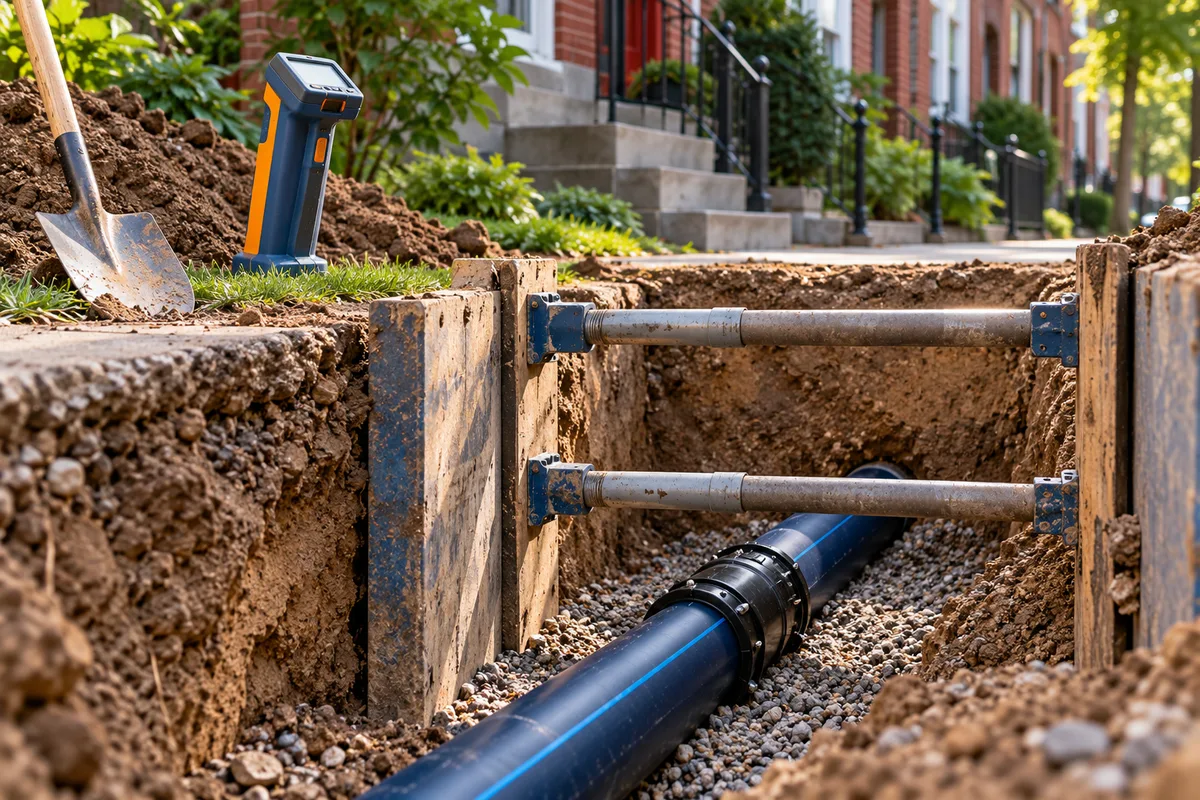
Access excavation, connections, permits, pavement work, and final testing should be described. If trenchless work is offered for the lateral, ask separately how the trap and changes of direction are handled. The boundaries of the repair matter as much as the method name.
Your next-step checklist
- Identify the component and location
- Ask what adjacent piping was inspected
- Define trap and lateral work separately
Discuss the next step for your property
For a Philadelphia service enquiry, call (267) 740-0245. Describe the symptoms, the address, and any inspection findings. Ask about Philadelphia curb trap repair and confirm provider availability before arranging work.
This guide describes a problem scenario, not a completed customer job. It is general information, not a diagnosis, engineering design, coverage decision, or legal advice.
- Philadelphia Water: customer responsibilities ↗
- City of Philadelphia: Notice of Plumbing Defect ↗
- City of Philadelphia L&I: current applicable plumbing codes ↗
Confirm current requirements with the responsible department and the provider assessing your property.